
Story 010 · When First-Mover Expires
UNTUCKit named the category. Now Riccobono is naming what comes next. The work he’s describing is the work that decides who’s still here in five years.
UNTUCKit built something most operators never get close to. Twelve million shirts sold. Around ninety stores across the US, Canada, and the UK. Reportedly profitable, north of $200 million in revenue. They didn’t enter the men’s button-down category. They invented one inside it.
That kind of position takes a decade to build and a decade to defend.
Riccobono said the quiet part out loud. The first-mover window has closed. The brands that built up around them, J.Crew, Bonobos, Mizzen+Main, Banana Republic, Vineyard Vines, Ralph Lauren, all sell shirts designed to be worn untucked now. The premise that built UNTUCKit became the premise of the category.
“Originally, we didn’t have to do anything but make a shirt designed to be worn untucked. That’s what we were. We had first mover advantage. It got us to where we needed to be. Now, four years later, there’s been too much time. A lot of new brands have come in, so we have to rely on all these other great things that we have.”
— Chris Riccobono, founder of UNTUCKit, on How Leaders Lead (2024)
What he said next is the line that matters. They have to compete now on “all these other great things.” Quality. Fit. Planning. Allocation.
He’s describing the operational layer underneath the brand. The unsexy part.
That’s the right read of the moment from the right person. It’s also the hardest stage in a brand’s life.
This isn’t really about UNTUCKit. It’s about every category creator that crosses the chasm. The pattern is consistent. The window closes. The brands with bigger relationships at retail enter. The category creator wakes up competing not on insight, but on execution.
The brands that built an operating layer in the good years survive. The ones that didn’t got swallowed.
A buyer’s lesson from a Nashua showroom
Sixteen years ago I sat in a North Face showroom in Nashua, New Hampshire and watched a sales rep pull out a glove with three conductive fingertips.
The ETIP.
It looked exactly like the Powerstretch we’d been selling for years, with one addition: you could use your phone without taking it off. Ten dollars more.
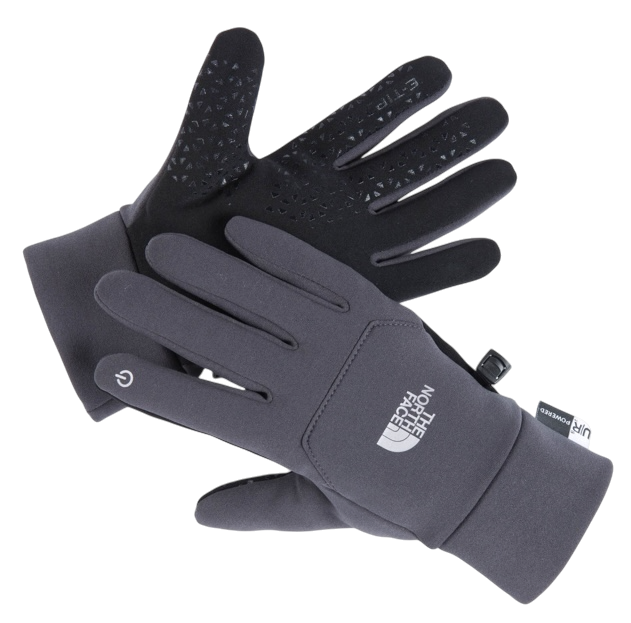
Touchscreen gloves were not a new category in 2010. Smaller brands had been selling fingerless mittens, convertible styles, and various imperfect solutions for over a year. I’d been watching them fly off our shelves at $25.
The category existed. It was being served, badly, by brands no one had heard of.
What changed when The North Face entered wasn’t the buy in Year 1.
Everyone underbought that first season, them included. They sold out. We sold out. The small pioneers sold out.
Customers walked away empty-handed everywhere because nobody, including the brand with the logo, saw the demand coming.
The shift happened in Year 2.
The North Face had a season of sell-through data and the brand credibility to walk into every retailer in the country and say “you need this glove, you need it deep, and we can deliver.” Retailers committed. The North Face scaled the buy with confidence because their relationships could absorb it.
The small pioneers had the same data. They did not have the leverage.
By the end of Year 2 the category had consolidated around the brand pragmatists trusted.
The lesson is not that big brands always buy deeper. It’s that once a category proves itself, the recommitment cycle goes to the brand with the most leverage at retail.
Novelty is a window. Execution is the moat.
Sixteen years and dozens of categories later, that pattern still holds. The window closes the moment a brand with bigger relationships proves it can sell the same thing.
From there, the only defense is the operating layer underneath the brand. The buy. The fit. The allocation. The chase. The edit.
Excellence at the parts no one outside the company sees.
The category creator’s trap
Brands that create a category build their early business on a single, hard-to-fake insight.
UNTUCKit’s insight: shirts could be designed to look good untucked.
The early years rewarded the insight. Operations didn’t need to be excellent because the product was novel enough to forgive a lot of mistakes.
Then the category gets recognized. The big brands enter. J.Crew. Bonobos. Mizzen+Main. Banana Republic. Vineyard Vines. Ralph Lauren.
The novelty moat evaporates.
The category creator wakes up competing not on insight but on execution. The brands that built an operating layer in the good years survive.
The brands that didn’t got swallowed.
Lost Sales Analysis is the lens for this stage of a brand’s life. I’ve watched operators measure sell-through and call it good.
Sell-through tells you how much of what you bought, you sold. It doesn’t tell you what you didn’t sell.
What you didn’t sell is the entire signal you need to defend the category from the next wave.
What we look for at the SKU and size level
When I run this kind of work for clients, the methodology is the same.
Daily inventory scanning across every SKU, every size, every fit type, every color in the hero category. Thirty days minimum. A brand’s hero category can run a thousand variants or more.
The framework is a four-state taxonomy. On any given day, every variant is in one of four states.
In Stock. Available and observable.
Cycled OOS. Was in stock at some point during the window, then went out.
Never Landed. Added to the catalog during the window. Never observed available.
Pre-Track Unknown. Existed before tracking started. Never observed available. Excluded from the math because we cannot tell if it sold or never arrived.
Cycled OOS and Never Landed are both lost sales. One you can debate. The other you cannot.
The patterns I see in this work are predictable enough that I can name them before I open the file.
Five patterns that repeat in category creators after the chasm
The numbers in the examples below come from a recent run. The patterns themselves I’ve seen often enough that the numbers stop surprising me.
The specialty fit ghosting at launch.
Three new launches in a single specialty fit type, added to the catalog over a three-week window. Every variant, every size, never observed in stock.
Daily scanning rules out a missed window.
The fit type itself had the highest demand pressure of any fit in the assortment, 47%. The brand kept adding new product to a fit that was already failing to land inventory.
That’s not a forecasting debate. It’s a process question.
The cross-fit demand signal nobody chased.
A single color in a single style cycled OOS in four of five fits at the core sizes. Real customer voice across the assortment.
The kind of pattern where you place a chase on Monday and hope your vendor can deliver.
Nobody chased it.
The markdown taken on something already moving.
One item marked down to half-off on a Friday. Every size cycled OOS by the following Monday.
The discount swept the spine clean on a SKU that did not need a discount at all.
Full-margin sales, given away in three days.
The markdown sitting on items that won’t clear.
Three other items got marked down in the same calendar window. Three weeks later they’re still in stock at the discount.
Those items should have been edited out four weeks earlier, before the markdown decision was even on the table.
Allocation by habit, not demand.
The fit type with 17% demand pressure got the most inventory dollars. The fit type with 47% demand pressure got the least.
That’s not someone doing the math wrong.
That’s an organization buying what it has always bought, in the proportions it has always bought it, and not adjusting when the demand signal moves.
What the operating layer needs to look like
If I were the CEO of a brand at this stage, here’s what I’d want to see, and the questions I’d be asking my team this week.
Lost Sales Analysis at the SKU and size level. Not the style level.
I’ve watched brands stop at the style level and miss the entire signal. A style that hits 60% sell-through can have a size that sold out three weeks early and a size that’s still on the floor in November.
The aggregate looks fine. The detail is bleeding money.
Never-Landed variants treated as a process emergency.
When you add a SKU to your catalog and inventory never shows up, that’s not a slow ship. That’s a system breakdown between merchandising, planning, and the warehouse.
Every day a Never-Landed variant sits is a day you’re paying for digital shelf space without a product to sell.
And a day a customer found you ready to buy and walked away with nothing.
Edit discipline before markdown discipline.
The markdown decisions that hurt the most are the ones taken too late on items that should have been edited weeks earlier.
By the time you’re discounting, the customer has already told you what they think.
Reading the no-sale signal and acting on it before it becomes a markdown is the entire game.
Cross-fit and cross-style demand reading.
When the same color/style is moving in four of five fits, that’s a brand-level signal. Not a single-fit win.
Chase it that way.
I’ve sat across the table from buyers reading that as a single-fit anomaly. They were leaving real money on the table.
Fit-type allocation tied to demand pressure. Not to last year.
Anchoring to historical mix is the single most expensive habit in retail buying.
The market moves. The buy has to move with it.
If a fit type has gone from 17% to 47% demand pressure since your last buy, your inventory mix should have moved with it.
Back to the brand that named the category
Riccobono is naming the work correctly. The first-mover window has closed. The “other great things” are the only thing that protects the brand from here.
That’s not a problem statement. That’s the right diagnosis from the right person.
The brands that survive past the chasm aren’t the ones that keep being clever. They’re the ones that get excellent at the unsexy parts. The buy. The size curve. The chase. The edit.
The same way the small touchscreen-glove brands got swallowed in 2010. The North Face didn’t invent the category. They were the first credible brand to enter it, and once Year 1 proved the demand, they had what the small pioneers couldn’t match at retail.
Sixteen years later the lesson still holds. Novelty wins early. Execution wins everything after.
What I’ve seen in twenty years of doing this work is that the gap between brands at this stage isn’t strategy. The strategy is usually right. The gap is whether the operating layer underneath the strategy is reading the signal at the SKU and size level, every week, and acting on it.
That’s the work I do. Thirty days. Full SKU and size analysis on your hero category. The first conversation is thirty minutes. Reply to this email or [book a call].
— Michael
Story 011 · The Year One of the Dig Out
Sportsman’s Warehouse just turned in their first positive same-store-sales year since 2020. That’s the headline. Read past it.
Sportsman’s Warehouse closed fiscal 2025 with full-year same-store-sales up 1%. They reduced inventory by $29.1 million. Cut net debt by 6.1%. CEO Paul Stone described it as a return to discipline.
This is the part where most retail trade publications cheer the comeback.
I’m not going to do that.
Five years of negative comps doesn’t get fixed in one year of plus one. The 2025 revenue base is almost certainly below 2022 and 2023. Maybe well below. The comeback everyone is describing is the floor of a multi-year dig out, not the ceiling.
The CEO’s own statement does the contrarian work. Listen to what he didn’t say. He didn’t say “we’re back.” He said they’re “approaching 2026 with appropriate caution” and have “a stronger foundation in place.” That’s an operator who knows exactly where his business is, and where it isn’t yet.
The lesson for operators reading the UNTUCKit deep dive isn’t “Sportsman’s Warehouse got it right.”
The lesson is the cost of waiting.
Every year you delay the operating layer work is a year you’ll spend climbing back.
Paul Stone’s playbook sounds exactly like the framework laid out above. Refining the assortment. Improving in-stock levels in key categories. Leaning into the higher-growth areas, in their case Fishing and Personal Protection.
That’s Edit & Amplify, named without being named.
The version of this story that should scare operators isn’t the comeback. It’s the math underneath it.
If your category gets recognized this year and you wait three years to do the operational work, you’ll spend the next five years digging out. The same way Sportsman’s Warehouse is digging out now.
The work doesn’t get easier.
The hole just gets deeper.
Story 012 · The Brand Closest to Allbirds Is Still Standing
Allbirds just sold for $39 million. The same month, Rothy’s installed a CFO-turned-CEO. The market just told us what’s at stake.
Allbirds went from a $4 billion IPO valuation in 2021 to a $39 million IP sale in early 2026. American Exchange Group, a brand management firm, picked them up for the logo.
The actual operation didn’t survive.
The closest brand to Allbirds in DNA is Rothy’s.
Same era. Both founded in the early 2010s. Both DTC-native. Both built on a sustainable-materials story. Allbirds with merino wool. Rothy’s with recycled plastic bottles.
Both raised growth-stage capital during the era when category novelty plus venture funding was supposed to be enough.
Rothy’s stayed private. That’s the first interesting difference.
The second is the leadership move Rothy’s made in January 2026, the same month Allbirds got sold for parts. Dayna Quanbeck, the company’s CFO since 2019 and President since 2024, transitioned to CEO. She is a CPA. She came up through retail investment banking. She was CFO and interim CEO at Charlotte Russe during its 2019 restructuring.
CFOs-turned-CEOs run differently than founder-CEOs and growth-marketers-turned-CEOs. They tend to read the math. They tend to cut what isn’t working sooner.
Quanbeck has seen what happens when a DTC brand runs out of operational runway. She watched it from the inside.
The third difference is the product. Rothy’s machine-washable flats have a durability narrative built in that Allbirds wool sneakers never had. Customers came back because the shoe lasted, not because they were buying into a story.
Sustainability is a narrative. Durability is a feature. The customer can tell the difference.
None of this means Rothy’s wins from here. The same competitive pressure that ended Allbirds is in their category too. Hoka, On, Birkenstock, and Veja didn’t just displace Allbirds. They displaced the entire premise that a DTC sustainability-first brand could hold a women’s casual footwear position against credible legacy competitors with better operations.
The market just sent a signal worth roughly $3.96 billion in destroyed valuation.
The signal: brands at this stage that don’t get the operating layer right end up sold for parts.
The closest brand still standing has a CPA running operations and a product with built-in durability. That gives them a chance.
What it doesn’t give them is forever.
The RetailLAB Trend Insight
May 8th, 2026:
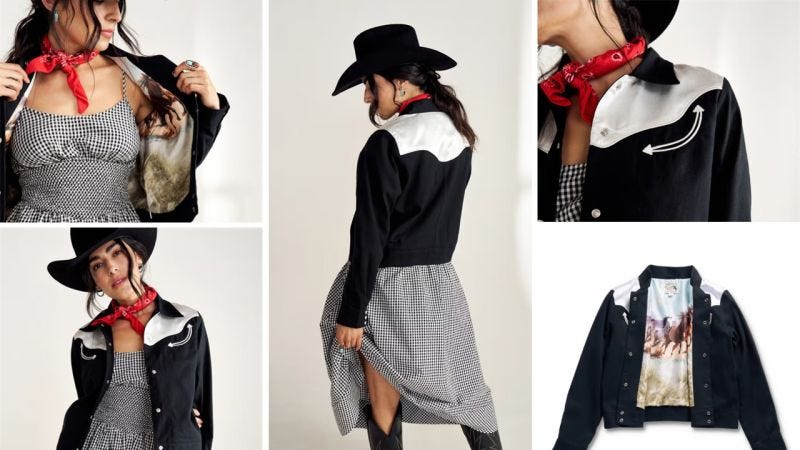
Tecovas Women's Dolly Jacket II, Black/White Cotton. Launched May 1, 2026. Five days later, 5 of 6 sizes are sold out at $165 full retail. Only XL remains.
Same story on the Blue/White Cotton colorway, which launched earlier on March 12. Every size, completely gone.
The solid Black version of the same jacket has been on the shelf since February 5, three full months, and is still fully stocked across XS through XXL.
When the newest patterned colorway clears 5 of 6 sizes in 5 days while the solid version sits fully stocked for three months at the same price, the customer is telling you something specific: the colorway is the product, not the silhouette.
For more observations like this, follow The RetailLAB for more.
The RetailLAB observes public storefront availability across daily scans. “Sold out” means publicly out of stock online at the time of observation. We do not have access to order data or unit-level sales volumes.